Home Travel
Category:

Travel

Advertising

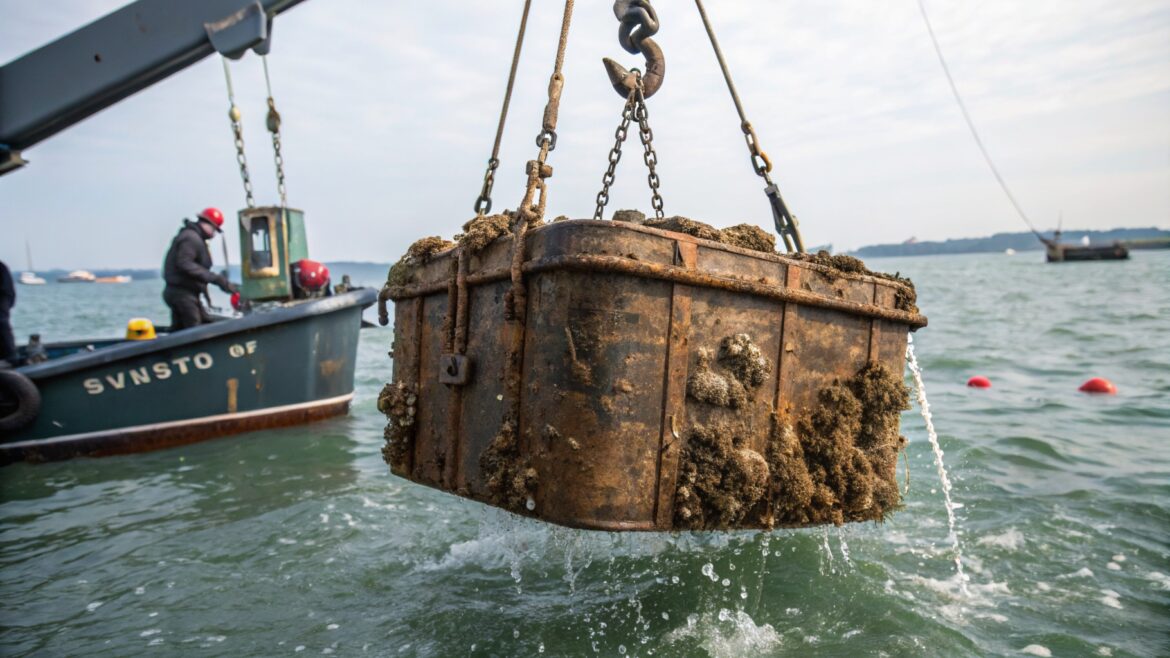
Cornwall, England – A routine fishing trip turned into a mystery when a local crew hauled a strange, barnacle-covered container from the seabed three miles off the coast of St. Ives.

The object – roughly five feet long, made of dark wood with rusted iron bands – had no markings, no serial numbers, and no logical explanation.

“We almost threw it back,” said captain Thomas Grady, 47. “But it was too strange.”

After an hour of debate, the crew pried open the rusted lock. Inside, packed in black sediment, lay a collection of centuries-old artifacts: a gilded bronze hand mirror, three leather-bound books in an unknown language, a jeweled cross, and sealed parchment scrolls.

Preliminary analysis suggests the items date from the late 15th century. But the mystery is this: the container shows almost no signs of being underwater for 500 years.

“We should have left it down there,” said 68-year-old fisherman Edwin Marsh. He refused to explain why.

The artifacts have been sent to a secure lab in London. The British Museum has classified the find as a “potential anomaly.”

Captain Grady says he’s going back to fishing. “Next time, I’m cutting the net.”

Advertising

Saving money while traveling doesn’t mean sacrificing comfort and experiences. Start by setting a budget for each destination, including transportation, accommodation, food, and entertainment. Whenever possible, use discounts, loyalty programs, and early booking — this often brings significant savings. Don’t forget about free or inexpensive entertainment: museums with entrance on certain days, nature walks, free excursions, and tourist routes around the city.

Pages: 1 2

Advertising

Advertising

Fast-changing circumstances are a normal part of any trip. To stay on course, it is recommended to think through several alternative scenarios in advance: a backup route, a backup area of ​​residence, alternative attractions. This allows you to remain calm and confident when unforeseen situations arise along the way.

Pages: 1 2

Advertising

If you are tired of overcrowded tourist spots, it is worth exploring less popular destinations while maintaining a high level of service and safety. Start with maps of the area and local routes that are often skipped by guides and travel aggregators. In such places, you will be able to see genuine culture, try authentic cuisine and feel the rhythm of the city or region without crowds.

Pages: 1 2

Advertising

Planning a route is the key to a smooth and efficient trip. Start by defining your goals: what exactly you want to see, what experiences you want to have, and how much time you are willing to spend on the road. Then create a rough schedule: break the route into days, highlight key points of interest, and leave room for spontaneous stops. This approach will help avoid overloading the program and give you freedom of choice as new opportunities arise.

Pages: 1 2

Advertising